Choose one piece
Take a tile from the public row and refill that slot from the supply. You may place the new tile or exchange it with the tile in your reserve.
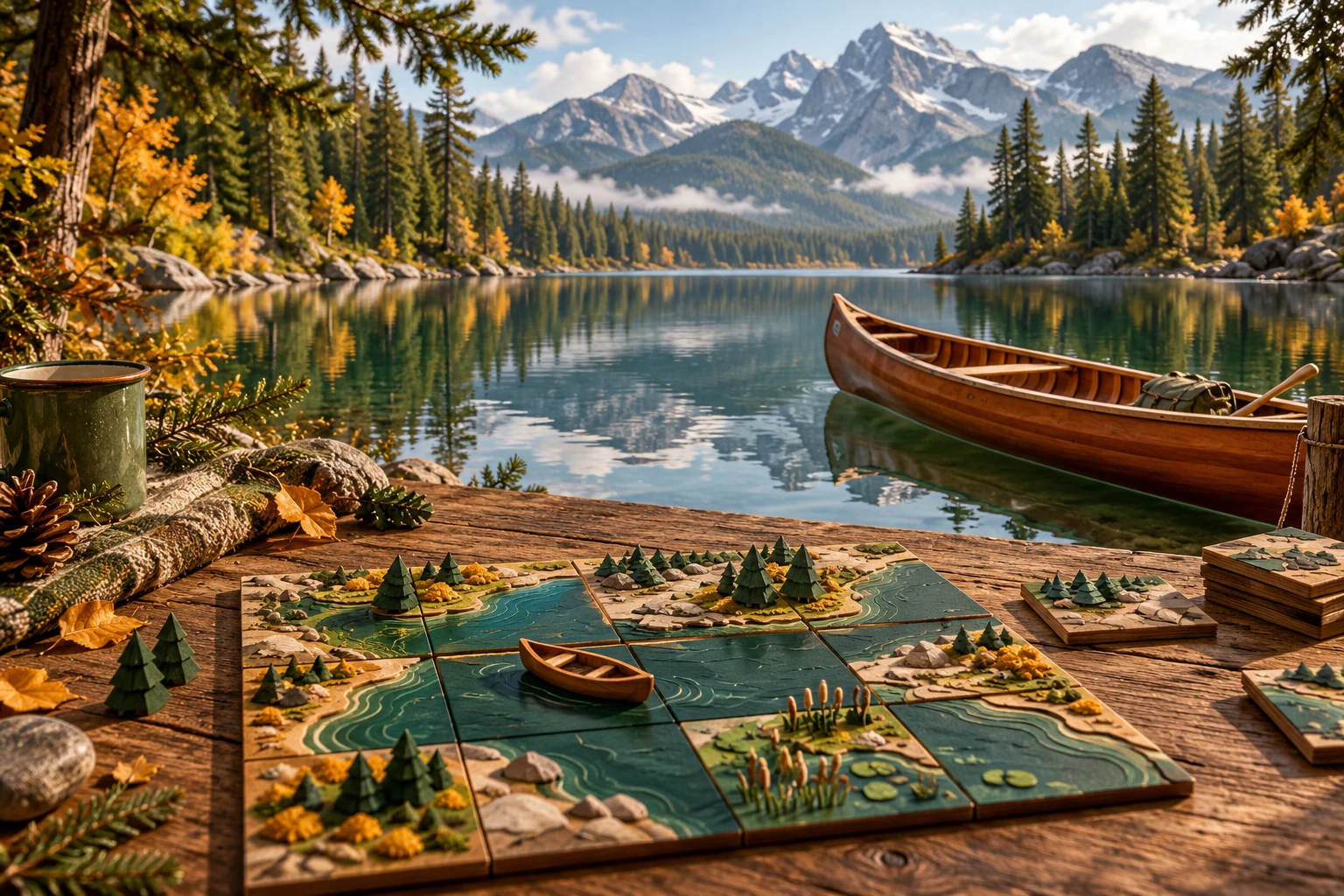
Build a little fishing lake from timber tiles, connect the useful habitats and leave enough room for the catch you have not imagined yet.
 MADE FOR
 THE WORLD ON YOUR TABLE
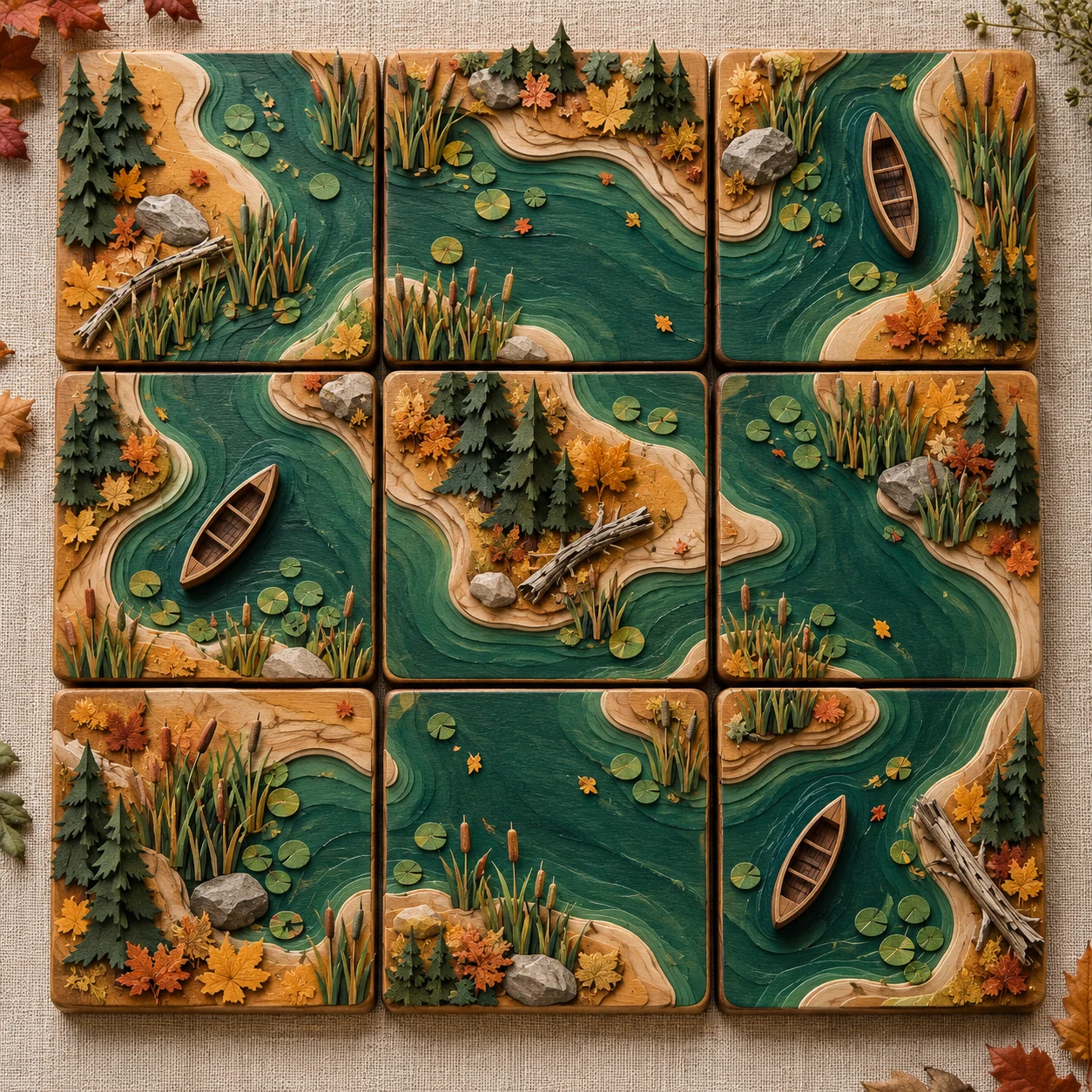
Your personal lake is a three-by-three tray. Reed beds, deep pools and stream tiles score when matching habitats share an edge. Diagonal corners do not count; a clean little connection is worth more than a crowded plan.
Reeds reward compact groups and make a forgiving starting corner for a new lake.
A larger connected pool can earn the one-time bass marker for that habitat.
A stream looks for an open side and a neighbour of its own kind; the tile’s position matters more than speed.
Choose a habitat for the centre space of this fixed example. The board highlights matching edges and counts their points. This is a placement illustration, not a full nine-turn game.
Choose a centre tile. Only matching shared edges earn points.
Build slowly enough to see the shape of the lake. Every player receives nine placements, and every shared edge remains part of the final score.
Take a tile from the public row and refill that slot from the supply. You may place the new tile or exchange it with the tile in your reserve.
Place the chosen tile in an empty tray space. After the first placement, it must touch an existing tile along an edge. Rotation changes the illustration, not the habitat type.
The first time you form a connected group of three tiles of one habitat, place that habitat’s bass marker beside your tray. Each habitat can earn its marker only once.
After everyone has placed nine tiles, count one point for every matching shared edge and three points per earned bass marker. Unplaced reserve tiles have no value.
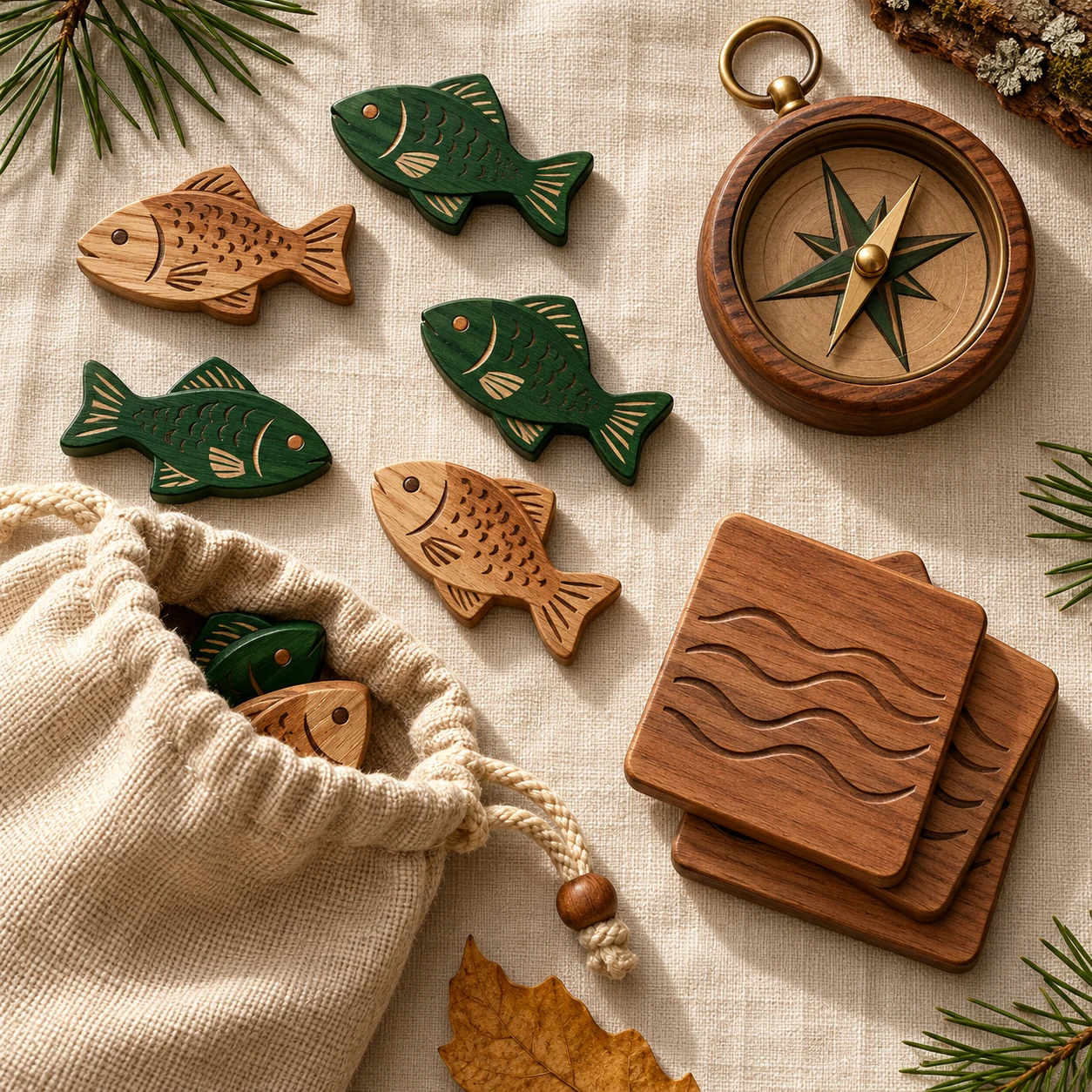
The proposed field box holds four lake trays, a terrain supply, twelve habitat bass markers, camp tokens, scatter symbols and optional guide cards. Paper squares and three colours of ordinary counters are enough to explore the core placement rules.
 01crew
Look at the next two terrain tiles, return them in either order, then continue with your normal choice from the public row.
 02tackle
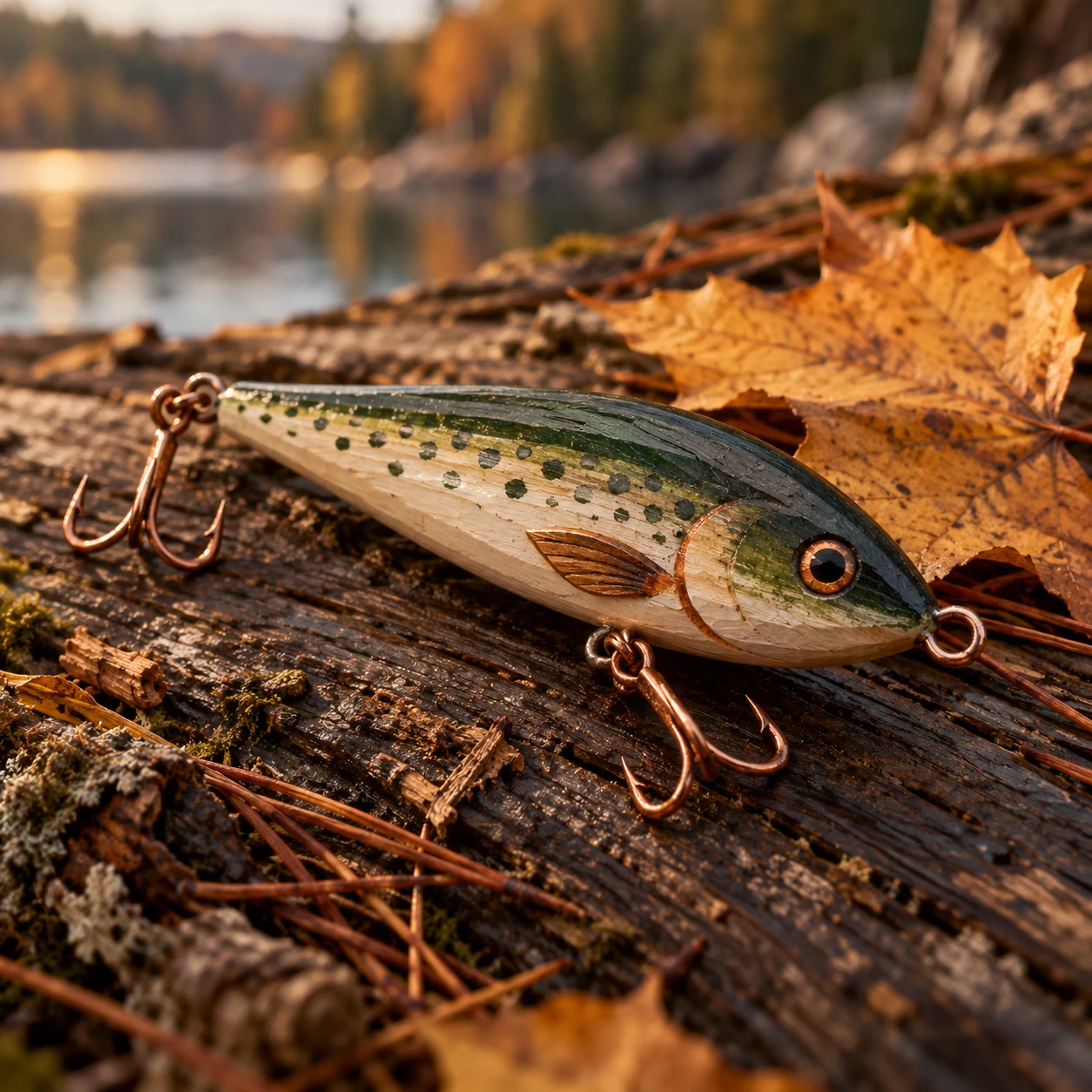
Exchange your reserve tile for any one tile in the public row. This happens before your normal placement, not instead of it.
 03catch
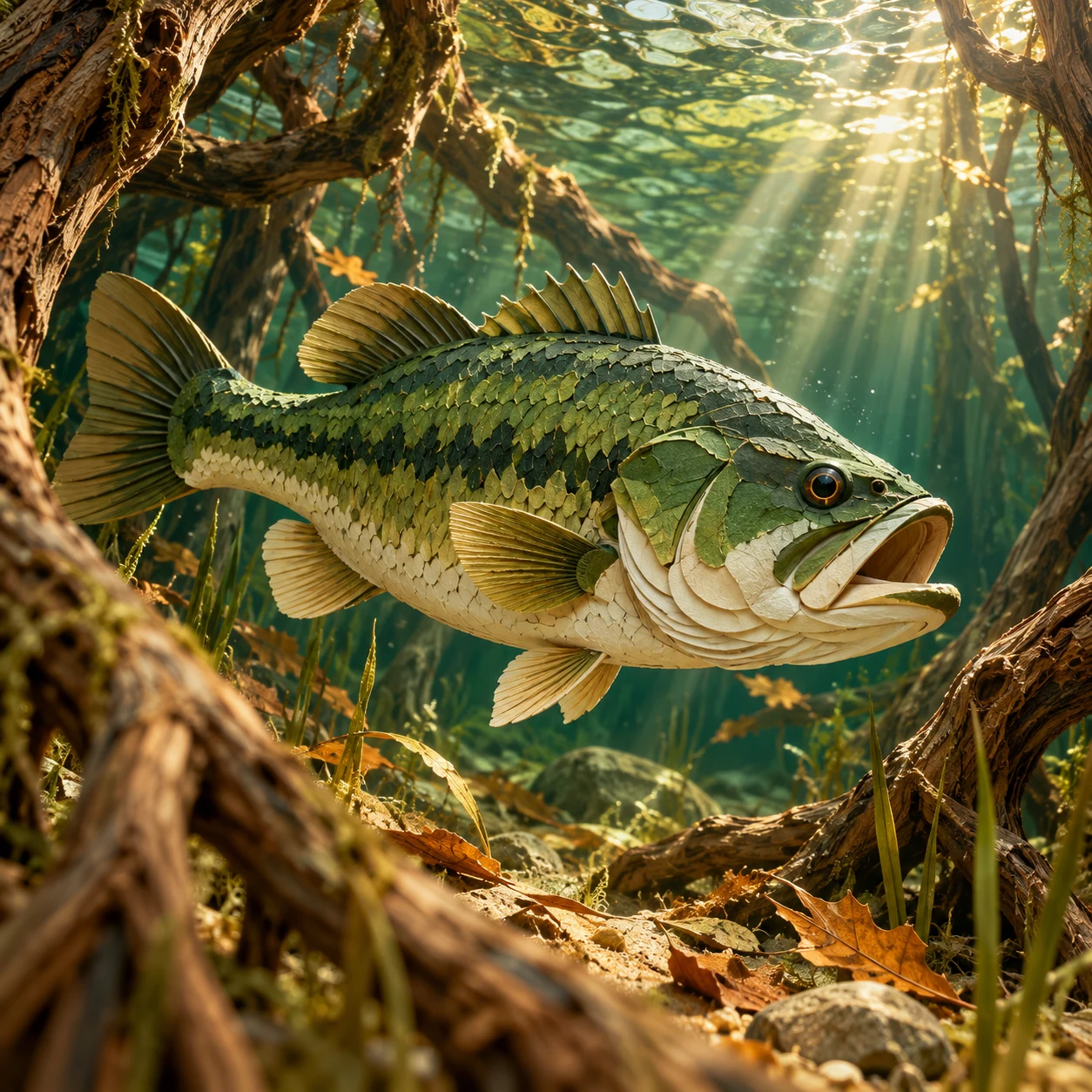
This marker records your first connected group of three pool tiles. It is worth three points at the end and is never awarded twice.
 Pine-Rain Shift
Discard and replace the entire public row. Apply this event once, then continue with the next player’s ordinary turn.
The useful thing was waiting in the dry corner.
A reed tile grants a reed symbol, a pool tile a stone symbol and a stream tile a pine symbol. Exchange one of each for a camp token. Spend a camp token to choose a tile of any habitat from the supply instead of the public row; it still uses your normal placement.
See it in the rules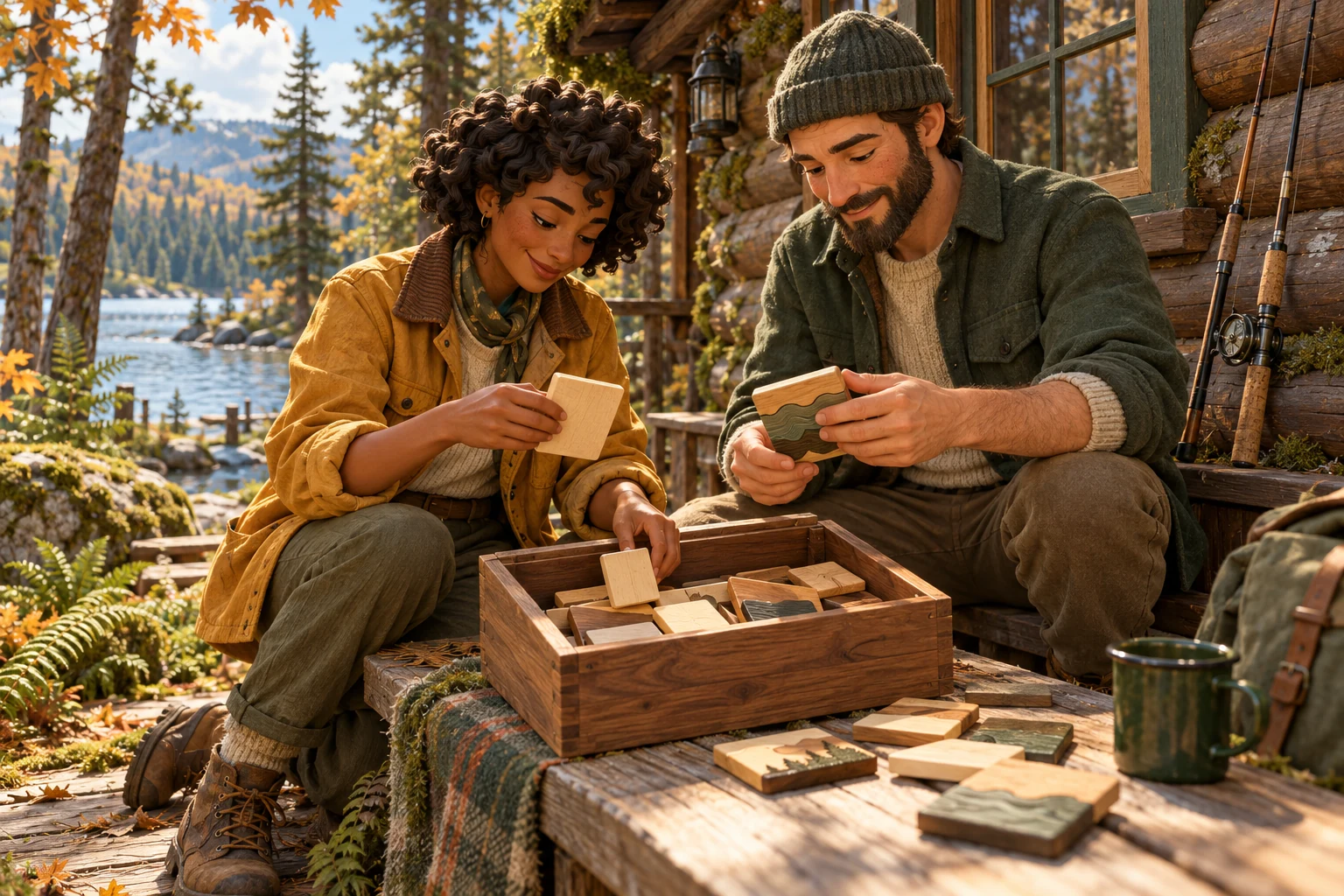 GOOD
GOODThese woodland guides describe different ways to approach the same nine placements. Their stories are flavour; every builder follows an equal set of rules.
No. Only a shared horizontal or vertical edge counts. This keeps the final lake easy to inspect without measuring or guessing.
A completed placement is fixed. The reserve lets you change your plan before that point, so take a moment to look at the open spaces.
It does not. It widens the choice for one of your nine normal placements, and is spent when you use that choice.
No physical edition is sold here. Timber & Tackle is an independent tabletop concept and rules presentation, with no checkout or delivery service.

Nine tiles are enough to begin. The satisfying part is discovering what they become when the edges start to agree.
Bring the rules to the table